



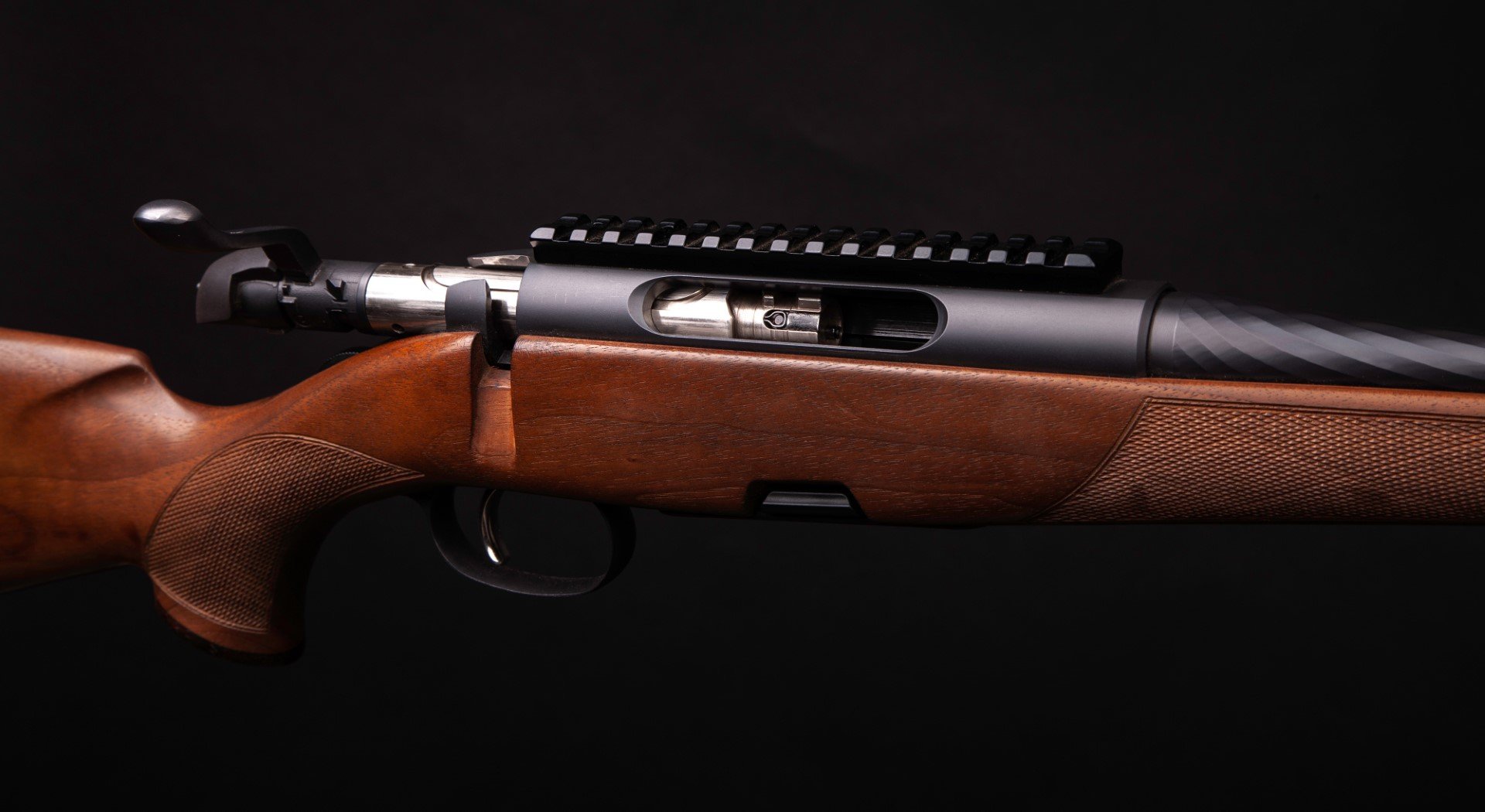
As a new owner of a bolt-action rifle, you owe it to yourself and anyone who shoots with you to know how to operate it properly and safely. (See firearm safety rules here.) The rifle is really a simple machine, and the model you hold in your hands is, in many respects, very similar to the Mauser M98, which revolutionized the firearms world at the end of the 19th century.
The following are the key components. Note: This is a greatly simplified glossary of terms to help you familiarize yourself with your new rifle. The operating manual that came with your rifle will go into greater detail.
Butt: This is the portion of the rifle that rests against your shoulder. You often will find a soft pad at the end, designed to lessen the effects of recoil.
Stock: Essentially, the stock is the frame (made of wood or a synthetic material) on which the mechanical parts rest.
Safety: The safety is a mechanism that, when engaged, keeps the rifle from firing by blocking the firing pin. There are different designs. Some rifles have a three-position safety, which is a rotatable lever found at the end of the bolt handle. Others have an upright pin to the left of the bolt. Read the instructions that came with your rifle thoroughly so you know exactly how to operate this feature.
Bolt: This cylindrical component slides forward and rearward to seat and eject a cartridge in the chamber.
Bolt Handle: The bolt handle allows the user to operate the bolt.
Chamber: Found at the rear end of the barrel, the chamber houses the cartridge you intend to shoot.
Trigger Guard: The guard is a metal or plastic fixture that wraps around the trigger to keep the trigger from accidentally discharging. Safety note: Your trigger finger never goes inside the guard until you are ready to fire.
Trigger: This is a lever that, when squeezed by your index finger, fires the rifle.
Magazine: Situated in the stock under the bolt, the magazine holds unfired ammo. Depending on the design of your rifle, it may be a fixed internal well or a detachable box.
Forend: This is the part of the stock in front of the chamber and under the barrel. It is where your offhand (non-shooting hand) holds the rifle.
Barrel: This is a grooved metal tube through which the bullet travels.
Muzzle: This is the end of the barrel, farthest away from you. It is where the bullet exits the gun.
Conclusion
The above definitions are designed to give you a basic working knowledge of how a bolt-action rifle operates. Read the operating manual that came with the rifle for more information.
FAQs
Q: If the safety is engaged, can I move a loaded rifle from one range station to another?
A: Absolutely not. The safety is a mechanical device—it is no substitute for common sense and proper safety procedures. Always unload the rifle before you change stations.
Q: My rifle doesn’t have a soft pad on the butt. What do I do?
A: The rifle will operate safely without a soft recoil pad, but you may find it uncomfortable to shoot. Aftermarket recoil pads are available. Installation is not a do-it-yourself operation. Take the gun to a gunsmith.
Q: The trigger on my rifle is difficult to pull. What can I do about it?
A: Some rifles have self-adjustable trigger pulls. If your rifle is so equipped, you can do the adjustment very easily. Consult the operating manual for instructions. Other rifles might need a gunsmith to do the work. Again, consult the operating manual.